
What is the difference between sedation and general anaesthesia?
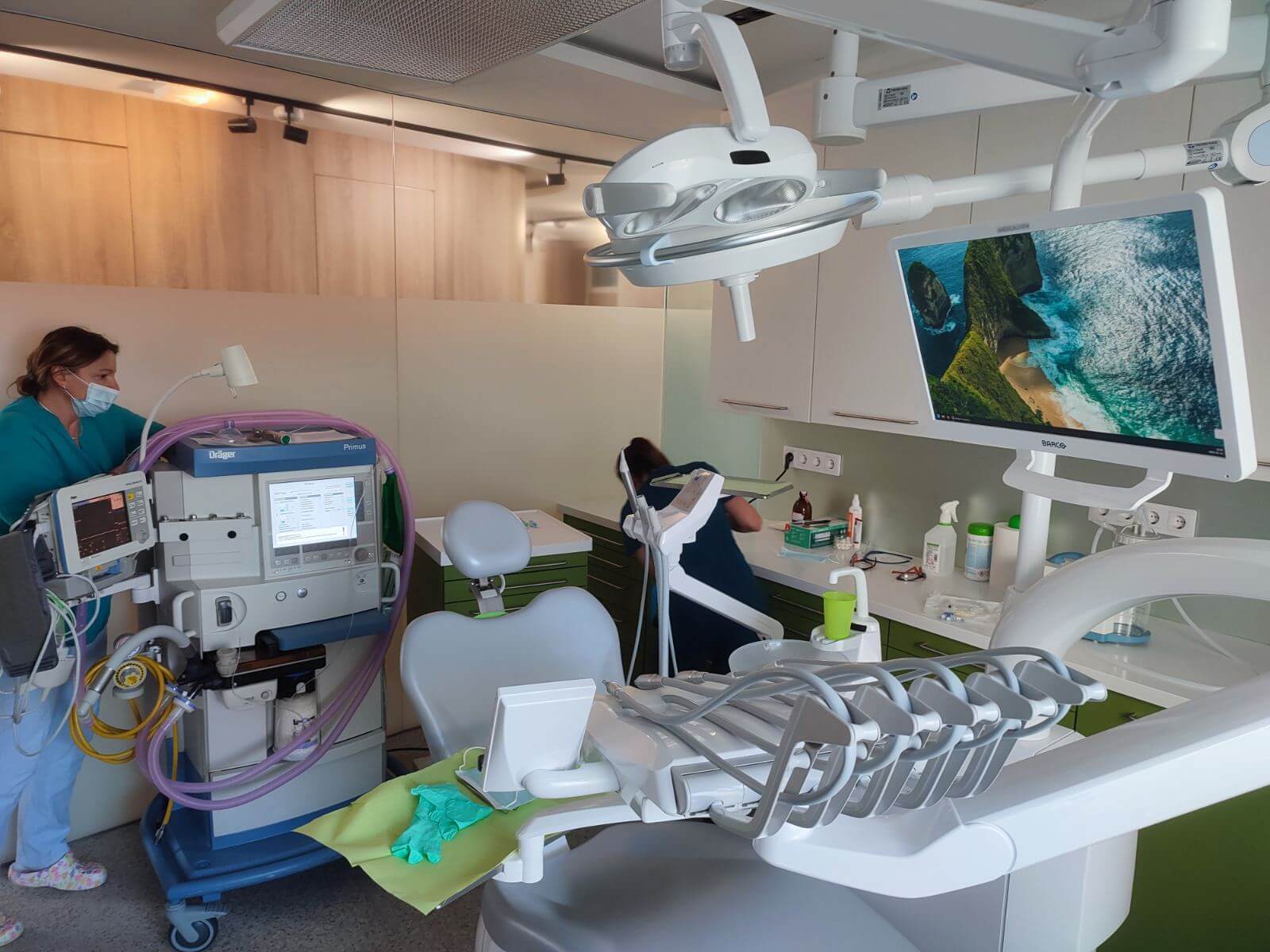
During sedation, the patient receives intravenous sedative medication under the supervision of an anaesthesiologist. This method cannot be considered deep general anaesthesia, as the reflexes are only diminished, not completely switched off. The feeling of tension and fear decreases, but the patient is still able to follow the dentist’s instructions if necessary. After the procedure, the patient has no memory of what happened (retrograde amnesia).
During general anaesthesia, the patient receives anaesthetic medication both intravenously and through intubation, administered by an anaesthesiologist. This results in a much deeper level of anaesthesia- what we classically refer to as general or deep anaesthesia. Reflexes are switched off, the patient is fully asleep, and they do not remember anything during or after the procedure. Longer and more complex treatments can be performed under general anaesthesia.
When do we recommend it?
Most dental treatments can be safely and painlessly performed without sedation or anaesthesia. Sedation or general anaesthesia is typically recommended when a patient experiences significant anxiety or fear of pain, has had previous traumatic experiences, or when certain anatomical or physiological factors (e.g., an exaggerated gag reflex) make dental treatment difficult while awake. Complex cases can often be completed in fewer appointments under general anaesthesia, as dental procedures can be performed safely for several hours.
Which dental treatments can be performed under sedation or general anaesthesia?
Practically all dental procedures can be carried out under sedation or general anaesthesia, but the final treatment plan is always determined during the initial dental consultation.
What are the requirements for general anaesthesia?
Before anaesthesia, a consultation with an anaesthesiologist is required. During this assessment, any underlying medical conditions or medications that may influence the anaesthetic process are identified. If necessary, certain tests must be performed prior to anaesthesia to ensure the procedure is safe (e.g., blood tests, ECG, etc.). The anaesthesiologist decides which tests are required and provides detailed information.
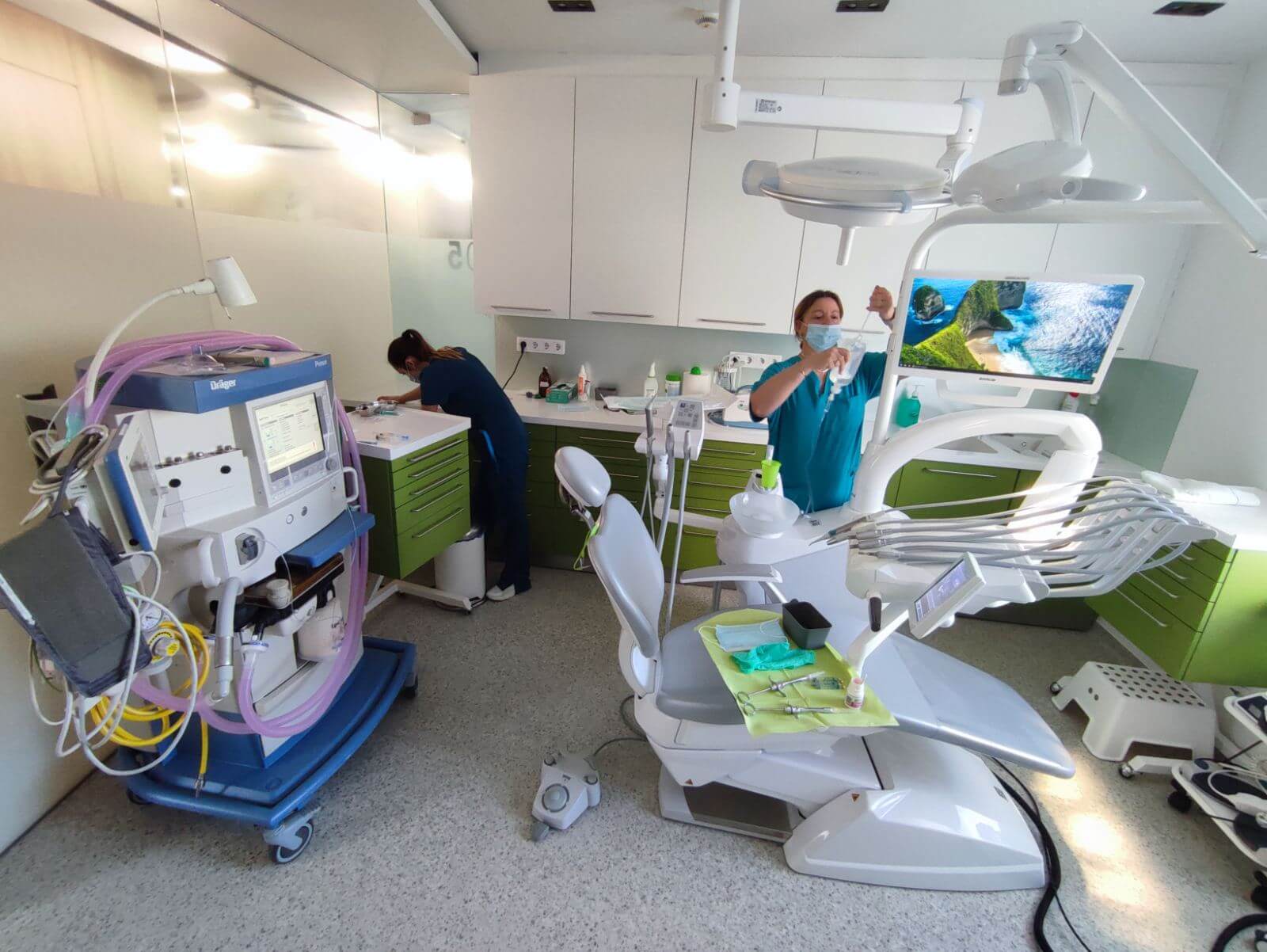
How does the anaesthesia and dental procedure take place?
The first step is the induction of anaesthesia, which is performed safely by our anaesthesiologist using intravenous and intubation methods. In addition to the anaesthetic medication, other drugs are administered, including pain relievers and sedatives. The dentist also applies local anaesthesia to the treatment area, but this is done once the patient is already asleep, so there is no sensation or memory of it. After the procedure, the patient must remain in the clinic for a few hours for observation and may only leave with an accompanying person.
Dental specialist

Dr. Botond Bukovszky, PhD
Dentist, Dento-alveolar surgeon

Dr. Fruzsina Gyekiczki
Dentist, dento-alveolar surgeon

Dr. Emese Gellérd
Anesthesiologist
Frequently Asked Questions
Will the treatment hurt if it is done under general anesthesia or sedation?
No. Both methods are designed to ensure that the procedure is completely calm and pain-free. During sedation, the patient becomes relaxed and drowsy; under general anesthesia, the patient is fully asleep. In both cases, the dentist also applies local anesthesia to the treatment area, so the body does not feel pain during the procedure.
How long does it take for the patient to wake up, and when can they go home?
Patients usually recover more quickly from sedation; 1–2 hours of observation is typically sufficient. Waking up from general anesthesia takes longer, and more time is needed before it is safe to go home. Throughout the entire process, medical professionals continuously monitor the patient. In both cases, an escort is required – patients may not go home alone.
How safe is general anesthesia or sedation in dentistry?
Modern sedation and anesthesia techniques are very safe, especially when performed by a qualified anesthesiologist and preceded by proper medical assessment. The patient’s heart and breathing functions are monitored continuously, and all necessary equipment is available, just as in a hospital setting.
Can I eat or drink before the procedure?
Generally not. Both sedation and anesthesia require an empty stomach. Usually, this means no food for 6 hours and no liquids for 2 hours before the procedure. The anesthesiologist will provide exact instructions, as this is a fundamental requirement for safe anesthesia.
What condition will I be in after the procedure? Can I work or drive?
On the day of the procedure, work, driving, and any task requiring concentration are not recommended. After sedation, the patient may remain drowsy with slowed reaction time for several hours. After general anesthesia, recovery is longer and may include temporary dizziness or fatigue. Therefore, patients must go home with an escort and rest in a safe environment.
Why do so many people choose sedation or anesthesia for dental treatment?
Many choose these options because fear, anxiety, or previous negative experiences make dental procedures difficult to tolerate when awake. Others prefer it for practical reasons: several hours of treatment can be completed in a single session, shortening the overall treatment time.
Is it possible that my body will not react well to anesthesia?
An in-depth medical assessment is always performed beforehand to identify potential risks. The anesthesiologist determines the safest medication combination based on the patient’s health status, medications, allergies, and past experiences. Unexpected reactions are extremely rare, and professional supervision minimizes risk.
Will I talk or move during the procedure?
During sedation, minimal movement or small reactions may occur, but this is normal and controlled. Under general anesthesia, this does not occur: the patient sleeps deeply, reflexes are inactive, and there is no movement, talking, or awareness.
Will I feel anything after waking up?
To ensure a pain-free recovery period, the anesthesiologist administers pain medication during the procedure. After waking, some patients may experience a mild sore throat (due to intubation) or general fatigue. Procedure-related pain usually appears only several hours later, and the pain medication recommended by the dentist is typically sufficient.
Does anesthesia or sedation affect my daily activities afterwards?
No. On the day of the procedure, slower reactions and drowsiness can be expected, so driving, operating machinery, consuming alcohol, or making important decisions should be avoided. By the next day, most patients return completely to their normal state.